
Час за одељење · Music · 🇧🇾 Belarus

Tsymbaly

A hammered dulcimer - one of Belarus's most beautiful traditional instruments

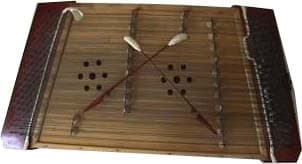
A tsymbaly hammered dulcimer with two small wooden mallets resting on its strings

Photo · Wikimedia Commons

Шта је то?

The tsymbaly is a traditional Belarusian musical instrument that looks like a flat wooden box covered in metal strings. You play it by striking the strings with two small wooden hammers - so the sound comes from hitting, not plucking or blowing. The result is a bright, sparkling, ringing sound that has been at the heart of Belarusian folk music for centuries.

Реци ми више

The tsymbaly is part of the hammered dulcimer family - similar instruments exist across Europe and Asia, from Hungary (cimbalom) to Iran (santur) to India (santoor). This shows how musical ideas travel and change as they move from place to place across the world. In Belarus, the tsymbaly developed its own distinctive shape and playing style.

The instrument has dozens of metal strings stretched across a trapezoidal (trapezoid-shaped) wooden frame. The strings are arranged in groups, a bit like a piano, and each group produces a slightly different note. The player holds a small wooden mallet in each hand and strikes the strings rhythmically, often playing very fast.

Playing the tsymbaly requires a lot of skill and coordination - both hands need to move at the same time, hitting different strings in the right order to make a melody and chords together. Watching an experienced tsymbaly player at full speed is quite spectacular, their hands flying across the strings in a blur.

At Belarusian folk festivals, the tsymbaly is often played alongside other traditional instruments: fiddles, bagpipes, flutes, and drums. Together they make the lively, energetic music that gets everyone dancing at weddings and celebrations. The Slavianski Bazaar music festival in Vitebsk celebrates these traditions every summer.

У учионици

Прођите ово са одељењем за 15 минута.

Разговарајте заједно

Подстицаји за дискусију

  1. 01The tsymbaly is related to instruments in Hungary, Iran, and India. What does this tell us about how music travels between cultures?
  2. 02You play the tsymbaly by hitting strings with hammers. How is this similar to - or different from - how a piano works?
  3. 03If you were inventing a new musical instrument, would you want it to be struck, plucked, blown, or rubbed? Why?
Пробајте ово

Активност за одељење

Explore the family of hammered dulcimers around the world. Research (or listen to recordings of) the tsymbaly (Belarus), cimbalom (Hungary), santur (Iran), and santoor (India). For each, write one sentence about what it sounds like. Then vote as a class: which do you think sounds most exciting to play?

Више о земљи Belarus

Друге ствари које чине Belarus посебном

Желите да се ваше одељење повеже са Belarus?

Изаберите Belarus приликом регистрације и показаћемо вам изводљивост с обзиром на временску зону.

Register your classroom